
Fix · Flying & Procedures
Fix: Aircraft Stay on the Tarmac
Taxiing aircraft use the link taxiways and never cross the grass.
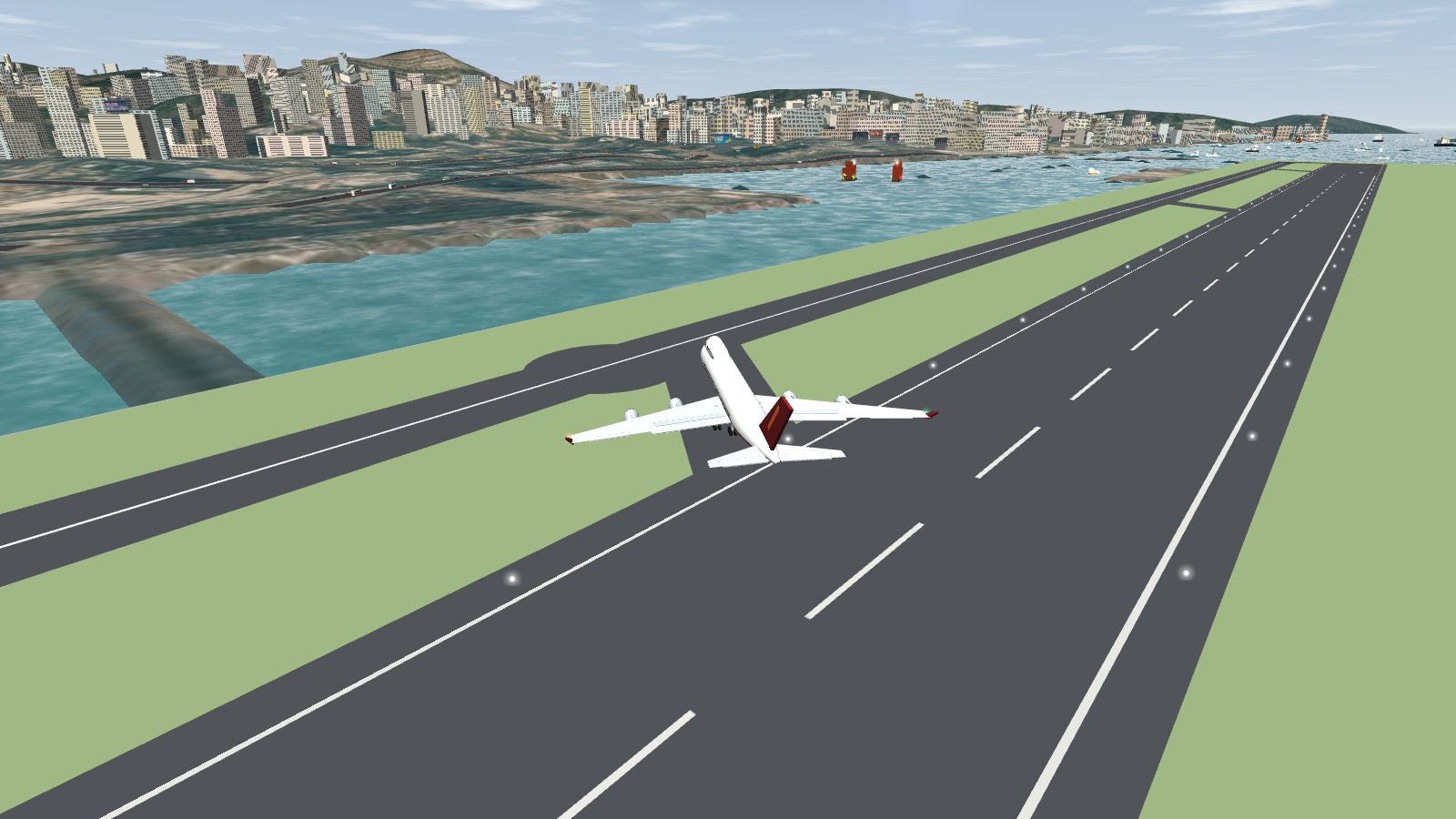
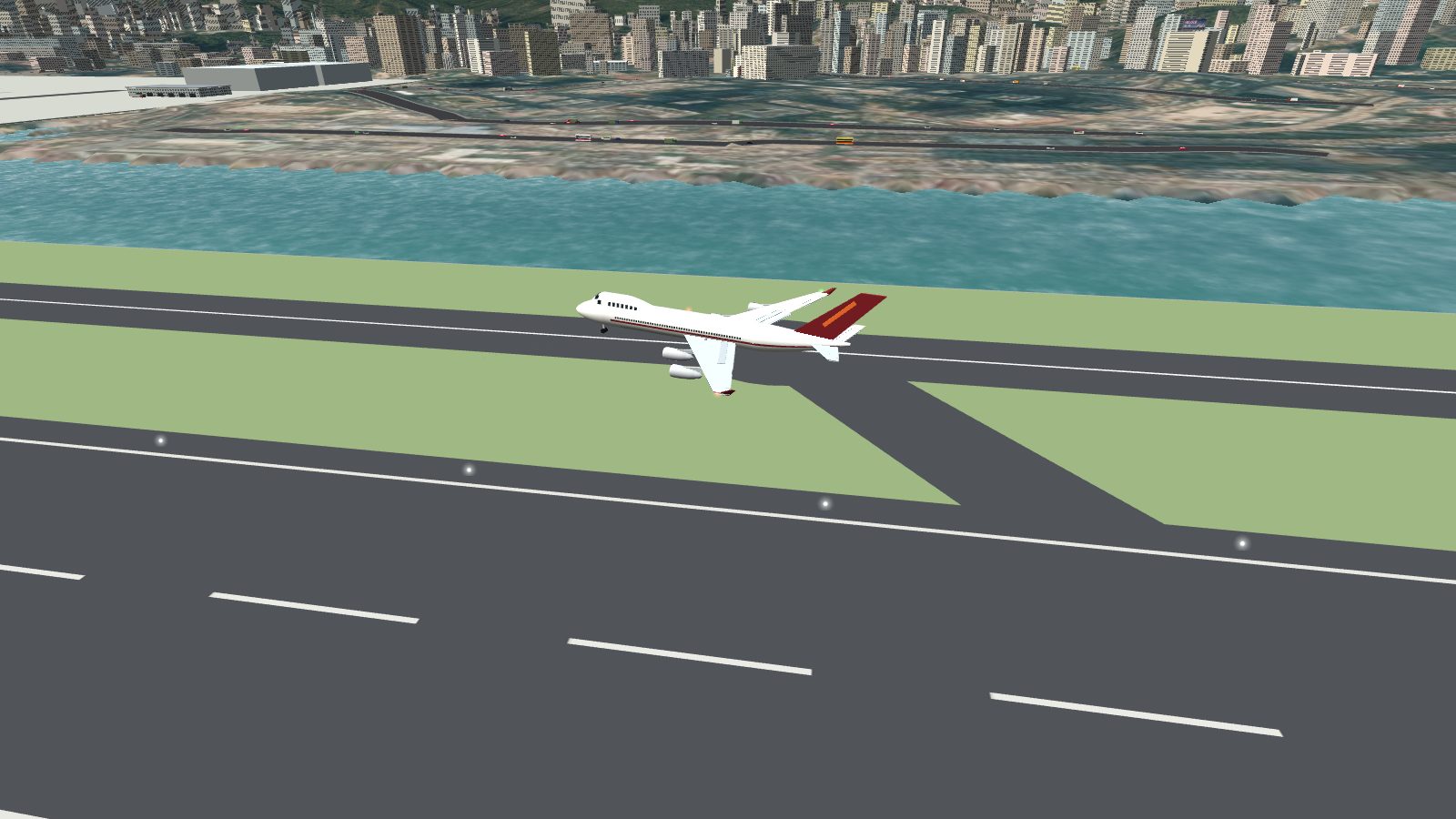
Aircraft on the ground now stay on the grey tarmac. None of them drives across the green grass any more.
What is new
- Arrivals used to leave the runway on a straight diagonal across the grass to taxiway A. They now turn off onto a link taxiway, follow it to taxiway A and carry on to the stand. Runway 13 arrivals take the link that leans toward the 31 end, and Runway 31 arrivals take a new link that leans toward the 13 end. There are now six links: five lean toward the 31 end and one toward the 13 end.
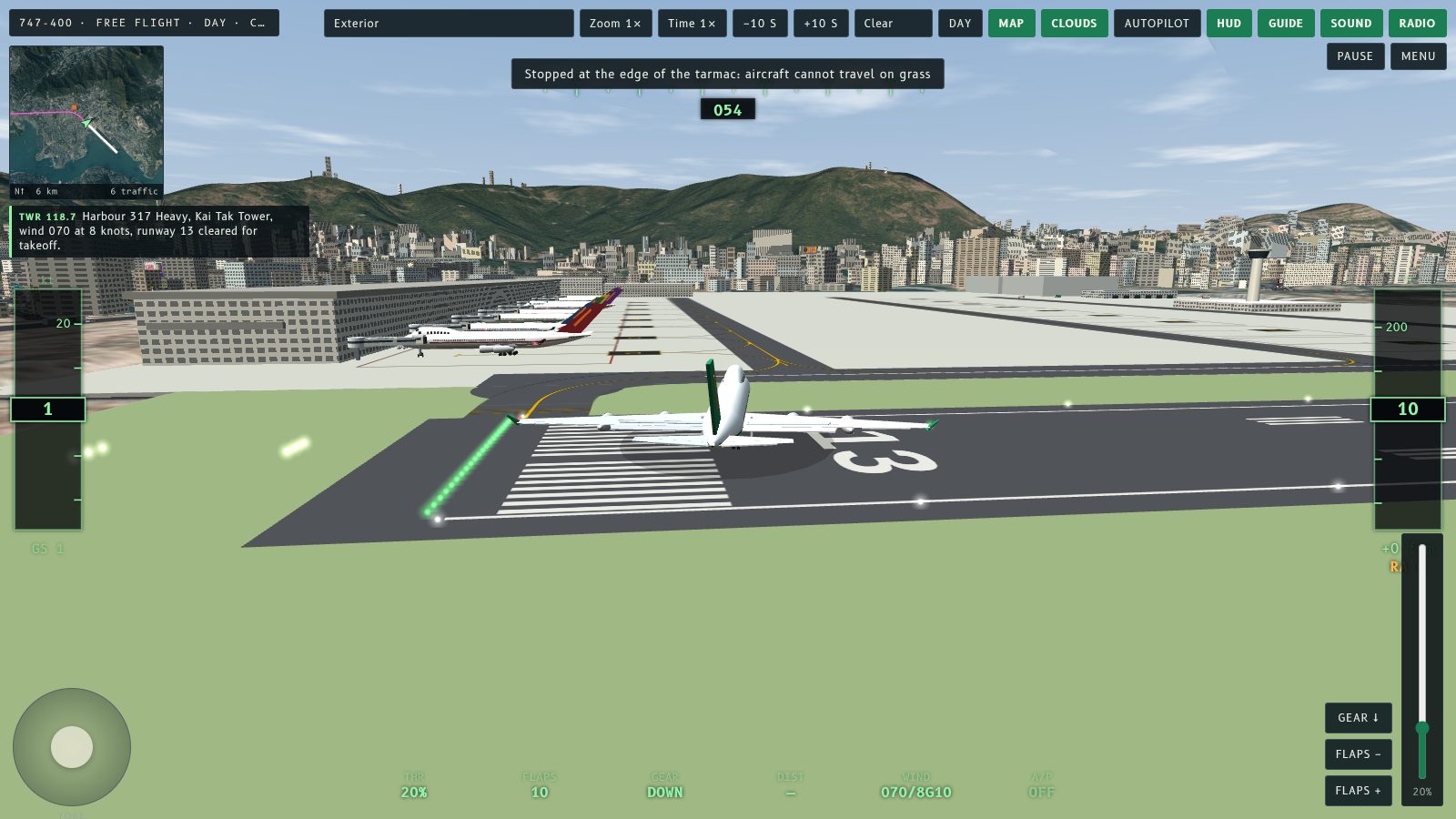
- Round pads widen the tightest corners, where a link meets taxiway A and where taxiway A curves onto each end of the runway. The nose wheel now stays on the tarmac through the turn.
- Your own aircraft has to keep all three wheels on the tarmac. Leave it at more than about 12 kt and the run ends in a runway excursion. Slower than that, the aircraft stops at the edge and a message tells you why.
- A touchdown with a wheel beyond the tarmac edge now counts as landing off the runway.
How it was checked
The test script now steps through every moment of the other aircraft taxiing, docking and being pushed back, on both runways and in the approach, Free flight and Plane Spotter modes. At every step the nose wheel and both main wheels must be on the tarmac. It also steers your own aircraft off the runway on each side, at walking pace and at speed.
What did not change
- The arrival and departure timings are the same, so every aircraft still docks and departs at the same moment as before.
- The autopilot still lands in every weather preset, and flying with no input still ends in a crash.
喺地面嘅飛機而家只會喺灰色柏油路面上行駛,唔會再駛過綠色草地。
有咩新嘢
- 降落嘅飛機以前會斜斜地橫過草地,由跑道直接駛去滑行道 A。而家佢哋會轉入連接滑行道,沿住行去滑行道 A,再繼續行去停機位。13 跑道嘅降落飛機用向 31 端傾斜嗰條連接滑行道,31 跑道嘅降落飛機就用新加嘅、向 13 端傾斜嗰條。連接滑行道而家一共有六條:五條向 31 端傾斜,一條向 13 端傾斜。
- 喺最窄嘅彎位,即連接滑行道同滑行道 A 交界,以及滑行道 A 彎入跑道兩端嗰度,加咗圓形嘅加闊位。轉彎時前輪而家都會留喺柏油路面上。
- 你自己嘅飛機要三個輪都喺柏油路面上。如果以超過大約 12 kt 嘅速度離開路面,今次飛行會以衝出跑道(Runway excursion)收場;慢過呢個速度,飛機就會停喺路面邊緣,並且彈出訊息話你知原因。
- 著陸時只要有一個輪喺柏油路面以外,而家就算係降落喺跑道之外。
點樣測試
測試程式而家會逐刻檢查其他飛機滑行、泊位同推後嘅過程,包括兩條跑道,以及進場、自由飛行同觀機三種模式。每一刻前輪同兩邊主輪都一定要喺柏油路面上。測試亦會將你嘅飛機向兩邊轉出跑道,分別試步行速度同高速兩種情況。
冇變嘅嘢
- 降落同離港嘅時間冇變,所以每架飛機泊位同離開嘅時間同之前一樣。
- 自動駕駛喺所有天氣預設都仍然可以降落,唔操作嘅話仍然會墜毀。
More from the blog
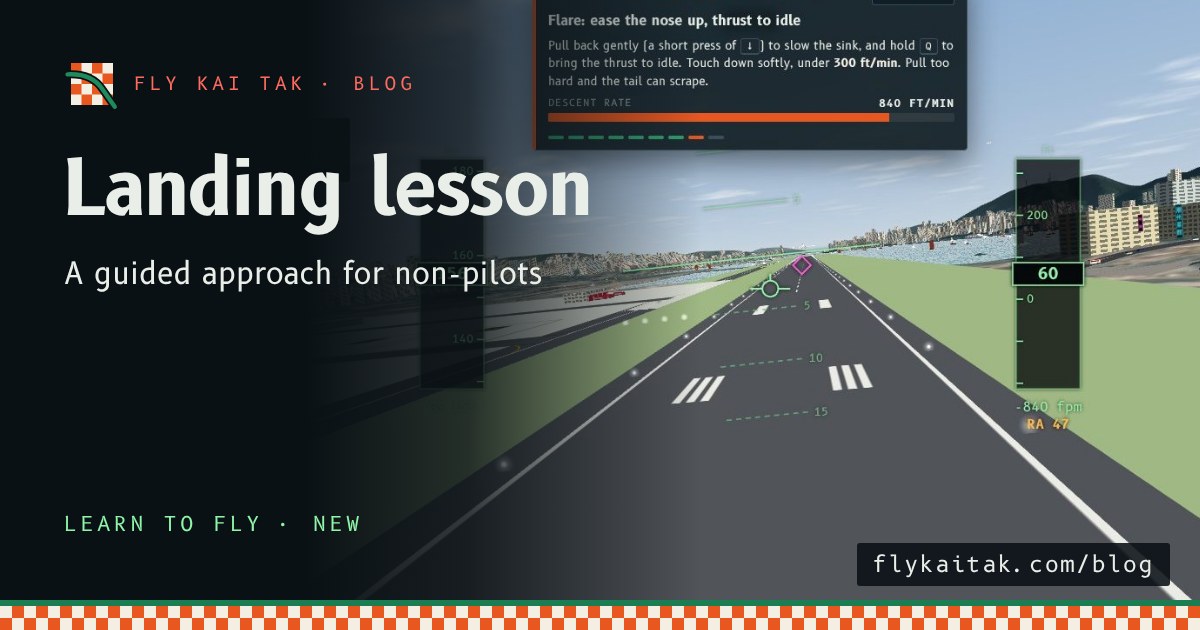
New: a landing lesson for first-time pilots
Fly Kai Tak now has a Landing lesson: a coach panel walks first-time pilots through the Runway 13 IGS approach in nine steps with live meters and plain-language tips.
Read the post →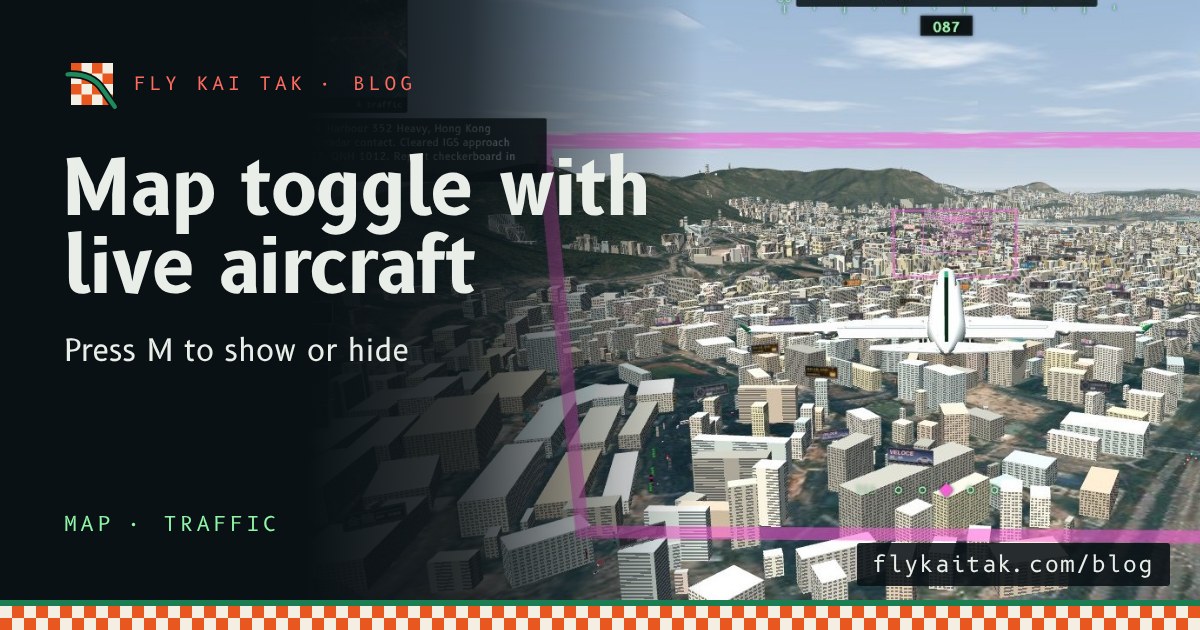
A map toggle with live aircraft
Fly Kai Tak's corner map now plots the other aircraft live, amber in the air with altitude and grey on the ground, and a Map button or the M key hides it.
Read the post →