
Feature
The checkerboard turn: flying the IGS 13 approach
Descend over Tsing Yi, aim at a checkerboard on a hill in Kowloon, then turn a 747 right by 47° over the rooftops. How the Runway 13 approach works in Fly Kai Tak.
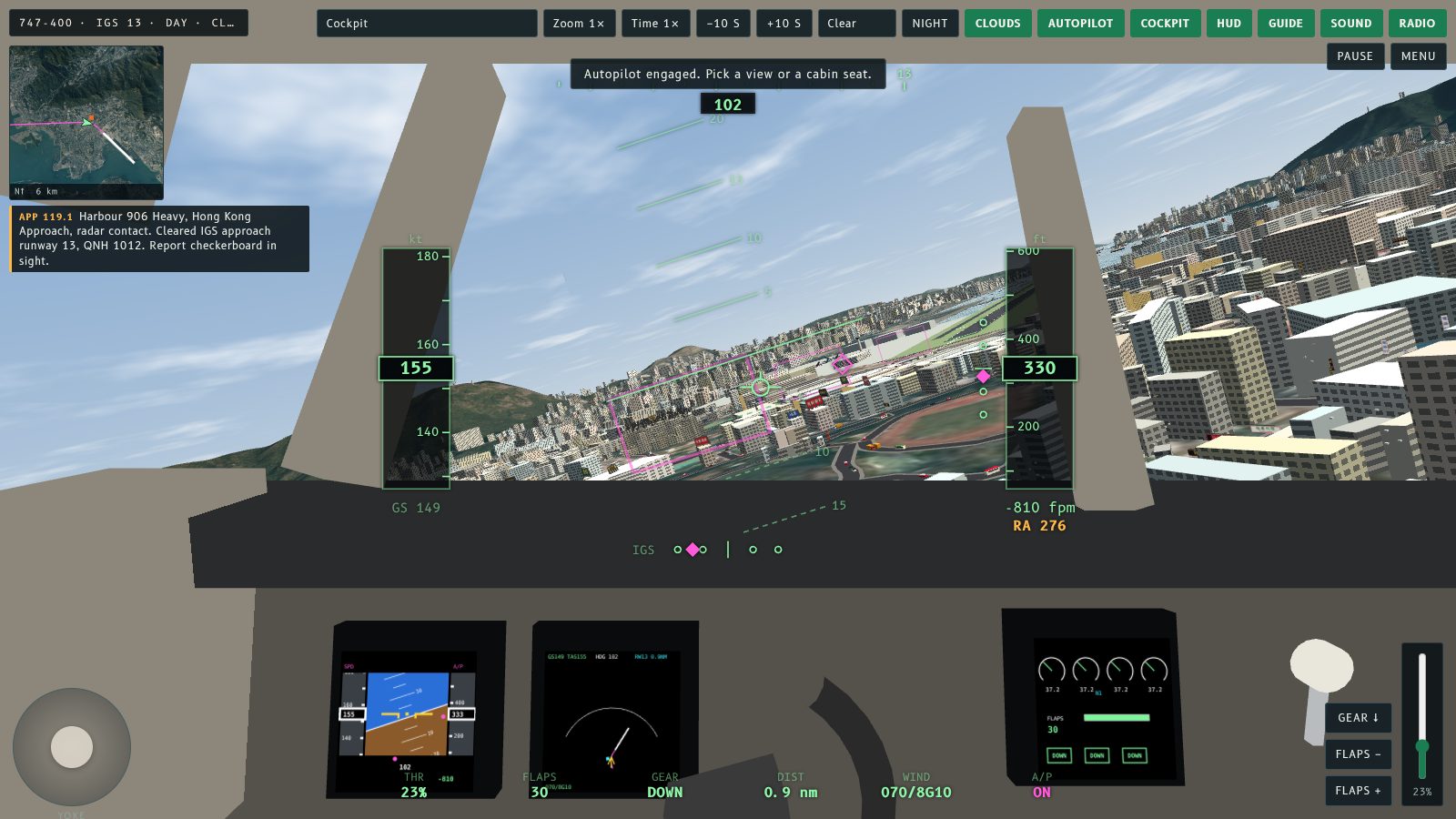
Kai Tak's Runway 13 had no straight-in approach. Pilots flew an instrument guidance system (IGS) course toward a hill in Kowloon, then made a steep turn at a giant checkerboard and landed on a runway that ends in the harbour. Fly Kai Tak puts that approach in your browser, set in 1998.
Start over Tsing Yi
The IGS 13 mode drops you at about 3,100 ft over Tsing Yi, already established on the course and heading 088. Hong Kong Approach (119.1) clears you for the IGS approach and hands you to Kai Tak Tower (118.7). Report the checkerboard in sight and the tower clears you to land.
The radio calls follow your position and the live weather, so the wind, QNH and visibility you hear are the ones you are flying in. Your readbacks are automatic, and other crews chatter on the frequency. Captions show on screen, and R turns the radio off.
Aim for the checkerboard
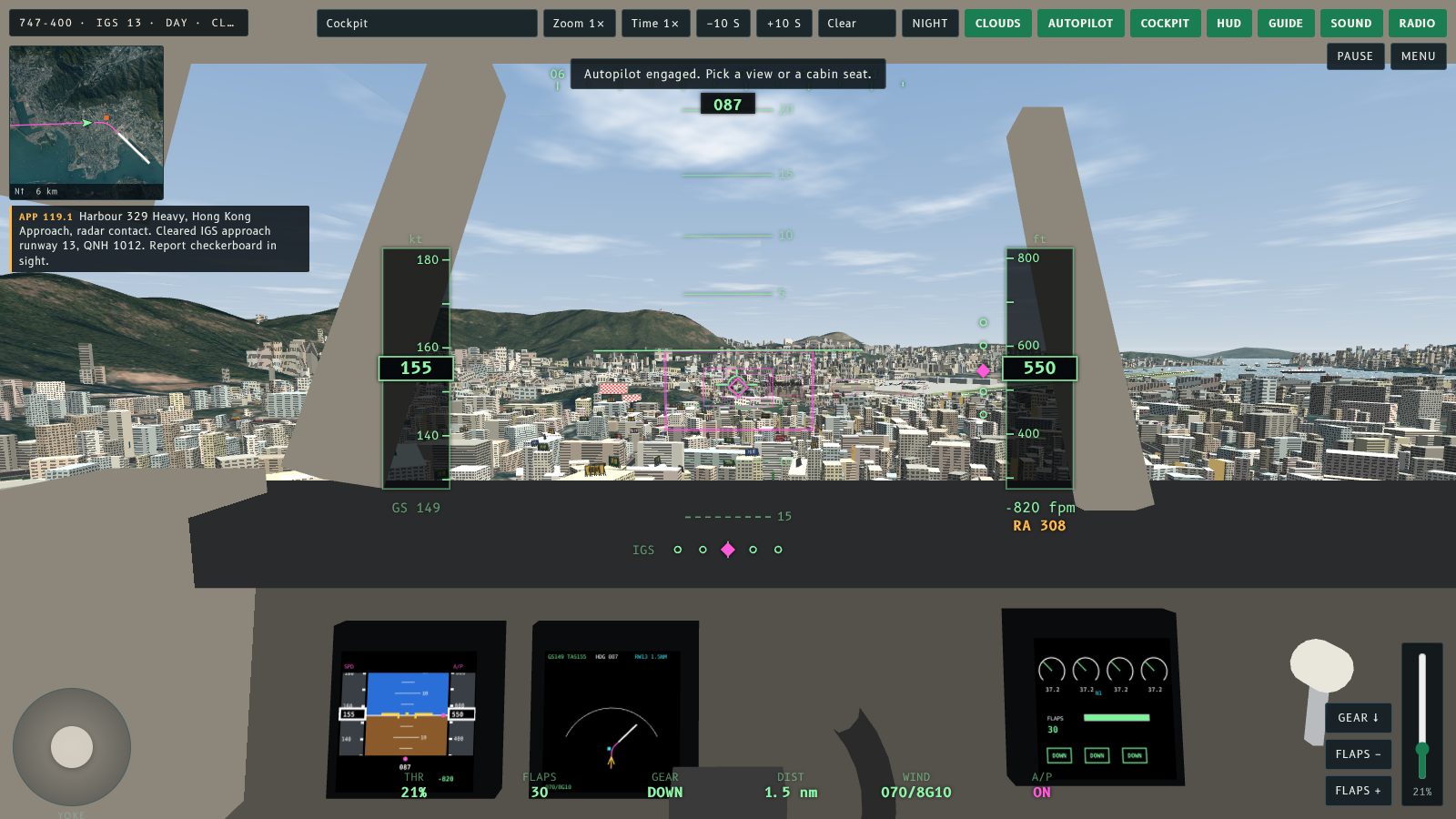
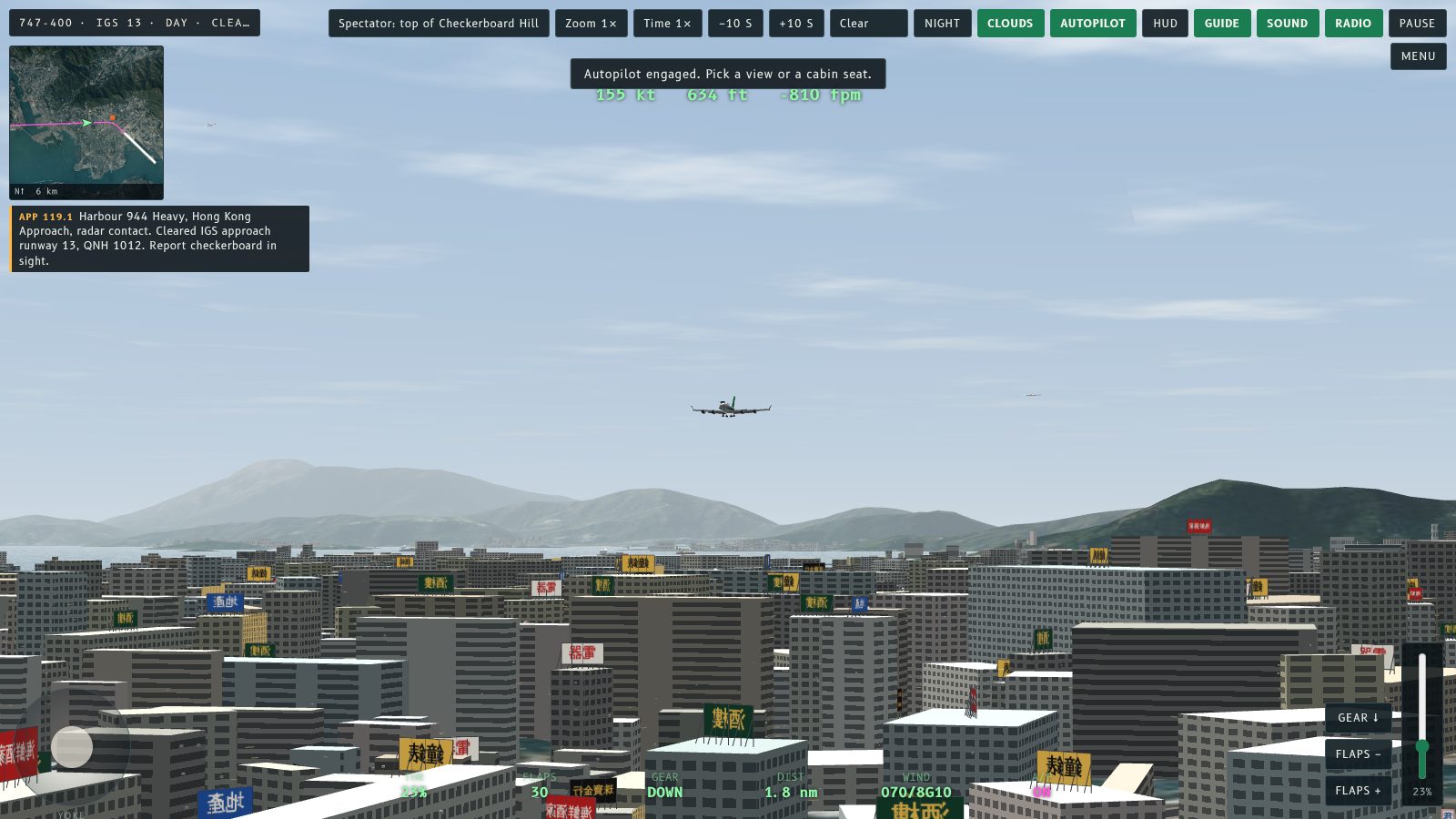
The checkerboard is a pattern of red and white squares on two concrete retaining walls on the hill at Kowloon Tsai, with a striped mast and the IGS lamp housings beside it. We built it from period photos. It is your aiming point: fly the course until it fills your windscreen, because the turn comes right after it.
If you want a good look at it first, spectate from the top of Checkerboard Hill, next to the IGS lamps, and watch other crews come in.
The 47° right turn
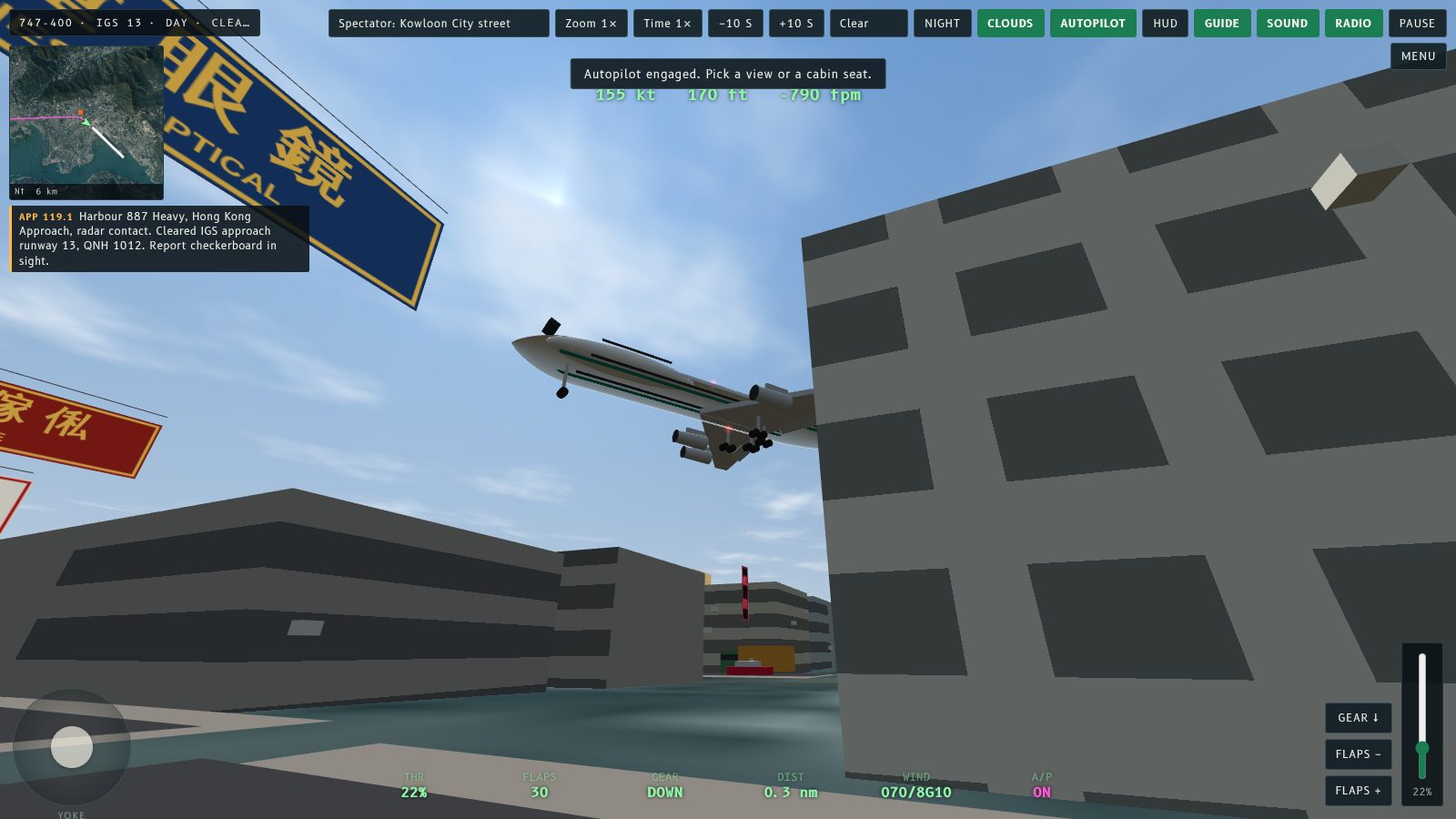
At the checkerboard you turn right by 47° to line up with Runway 13, whose true heading is 134.08°. You do it low, with Kowloon City's rooftops right under the wing. In the sim the streets are full of detail from period photos: shop signs, signs hung across the roads, rooftop billboards, laundry poles and bamboo scaffolding.
Want to see how low that really is? Pick the Kowloon City street spectator view. The aircraft passes just overhead.
Land before the harbour
Straighten up, hold the glidepath and put it down on 3,390 m of runway that finishes in Kowloon Bay. Every run ends one of two ways: a landing, which is graded, or a crash, which tells you the cause.
Helpers, if you want them
- Approach guide. Magenta gates along the IGS path and through the turn. It is on by default, and you can untick it in Options to fly without it.
- Autopilot. The autopilot and autothrottle fly the full approach and autoland. Press Z, or tick “Computer flies the aircraft”, and pick a view or a cabin seat.
- Rewind. [ and ] jump back or forward 10 seconds, including back from a crash.
- Views. C cycles cockpit, exterior, tower, the spectator spots and the cabin.
Try this first
Pick the 747-400, clear weather and the approach guide, then let the autopilot fly it once from a cabin seat. Fly it by hand next, and keep your eyes on the checkerboard.
啟德 13 號跑道冇得直線進場。機師要沿住儀器導航系統(IGS)航道飛向九龍一座山,喺一個巨型棋盤位置急轉彎,然後降落喺一條盡頭係海港嘅跑道。Fly Kai Tak 將呢個進場程序放入你嘅瀏覽器,時間設定喺 1998 年。
由青衣開始
IGS 13 模式會將你放喺青衣上空約 3,100 呎,已經對正航道,航向 088。香港進場台(119.1)批准你做 IGS 進場,然後交俾啟德塔台(118.7)。報告見到棋盤之後,塔台就會批准你降落。
無線電通話會跟住你嘅位置同實時天氣,所以你聽到嘅風、QNH 同能見度,就係你飛緊嗰刻嘅實況。你嘅複誦會自動完成,頻道上亦有其他機組人員傾偈。畫面會顯示字幕,按 R 可以關閉無線電。
瞄準棋盤
棋盤係喺九龍仔山上兩幅混凝土擋土牆上嘅紅白方格圖案,旁邊有一支間條桅杆同 IGS 燈箱。我哋根據當年相片重建。佢係你嘅瞄準點:沿住航道飛,直至佢佔滿擋風玻璃,因為轉彎緊接喺佢之後。
如果想先睇清楚,可以喺棋盤山山頂、IGS 燈旁邊觀機,睇其他機組進場。
47° 右轉
喺棋盤位置向右轉 47°,對正 13 號跑道(真航向 134.08°)。你要低飛轉彎,九龍城嘅屋頂就喺機翼下面。模擬器入面嘅街道有大量根據當年相片製作嘅細節:商店招牌、橫跨馬路嘅招牌、天台廣告牌、晾衫竹同竹棚。
想知道真係幾低?揀九龍城街道嘅觀機視角,飛機就喺你頭頂飛過。
海港之前降落
拉直機身,守住下滑道,喺 3,390 米長、盡頭係九龍灣嘅跑道上著陸。每次飛行只有兩種結局:成功降落,會被評分;或者撞機,系統會話你知原因。
想要嘅話,有輔助功能
- 進場指引。沿 IGS 航道同轉彎位置顯示洋紅色指引門。預設開啟,可以喺「選項」取消剔選,自己飛。
- 自動駕駛。自動駕駛同自動油門會飛完整個進場並自動降落。按 Z,或者剔選「電腦駕駛」,再揀個視角或者客艙座位。
- 倒帶。[ 同 ] 可以後退或前進 10 秒,撞機之後都可以後退。
- 視角。C 會輪流切換駕駛艙、機外、控制塔、觀機位置同客艙。
先試呢個
揀 747-400、晴朗天氣同進場指引,然後喺客艙座位睇自動駕駛飛一次。之後自己手動飛,眼睛盯住棋盤。
More from the blog
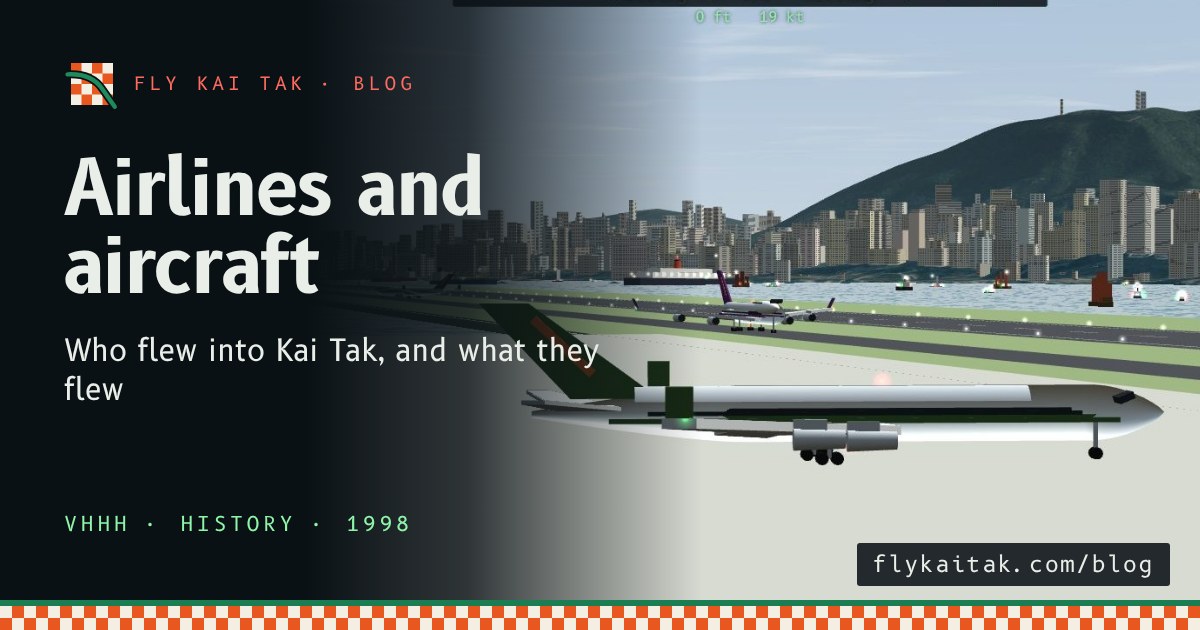
The airlines and aircraft of Kai Tak
A guide to the airlines and aircraft types at Kai Tak in the 1990s: Cathay Pacific, Dragonair, Qantas, BA, Singapore, Thai and JAL, with brief histories.
Read the post →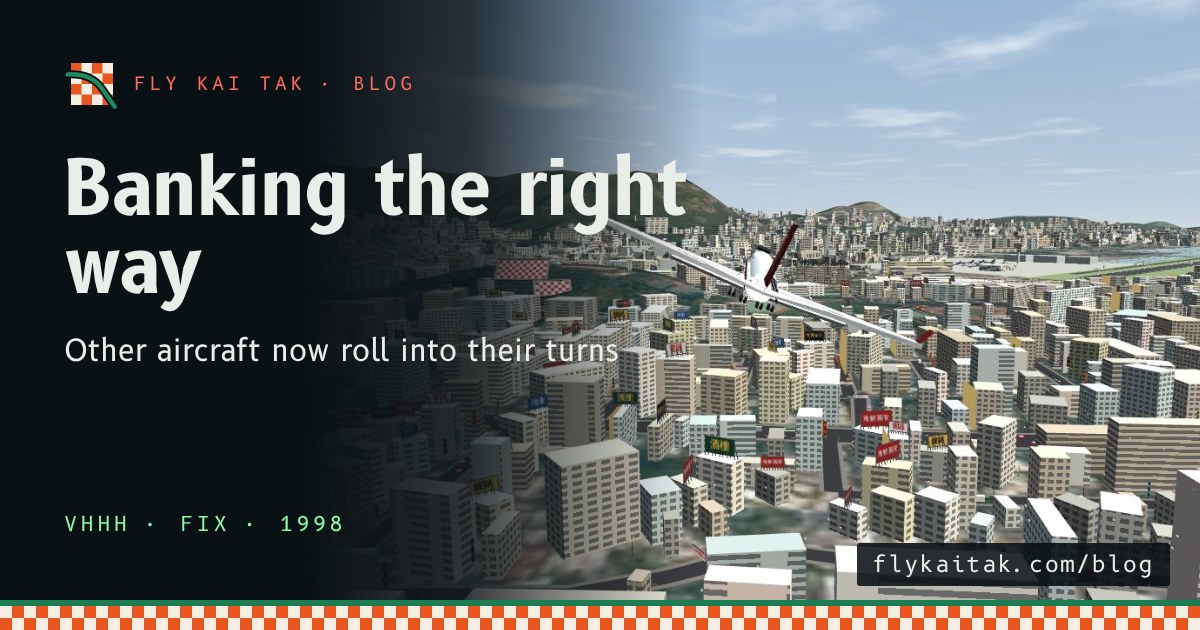
Other aircraft now bank the right way
Fly Kai Tak fix: other aircraft were drawn banking the wrong way in turns. Arrivals and departures now dip the inside wing, as real jets do.
Read the post →