
New · Aircraft
New: jet bridges and pushback tugs at the Kai Tak terminal
Aircraft now park nose-in at jet bridges, and a tug pushes each one back when it leaves.
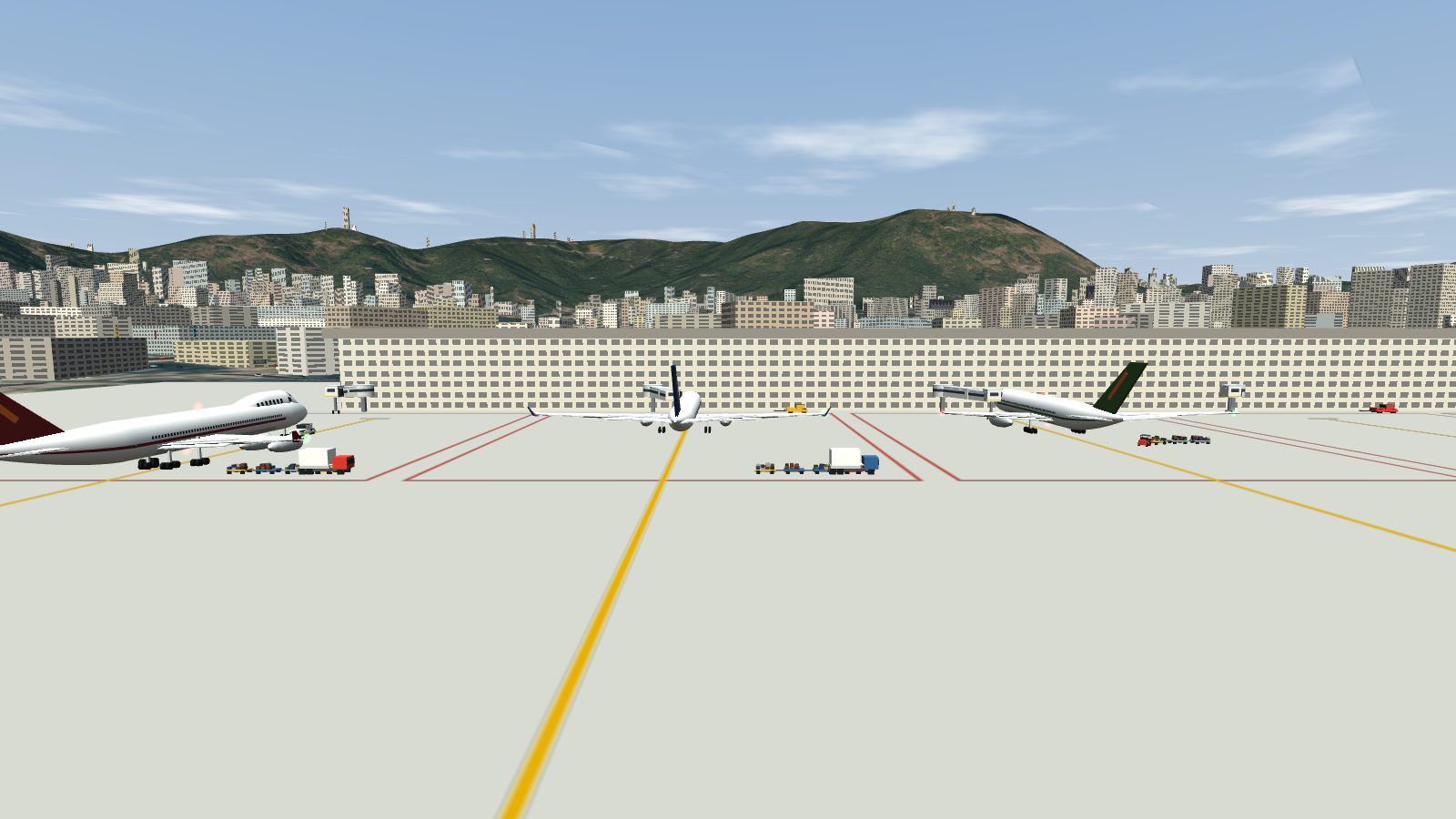
The Kai Tak terminal now has jet bridges. Aircraft taxi in, park nose-first at a bridge, and are pushed back by a tug when they leave.
What is new
- Six stands along the terminal, each with its own jet bridge. The terminal is longer so that every stand reaches it.
- An arriving aircraft leaves the runway, taxis along the parallel taxiway and turns down the stand's yellow lead-in line to stop at the bridge.
- The bridge swings out to the forward left door once the aircraft has stopped, and swings back before it leaves.
- A pushback tug waits in a bay in front of the terminal. It drives to the nose gear, pushes the aircraft straight back, turns it to face the runway, then drives back to its bay.
- After the push the aircraft taxis out and takes off as before.
- Catering trucks and baggage tractors work each docked aircraft from the right side. The apron buses are gone, because passengers now use the bridges.
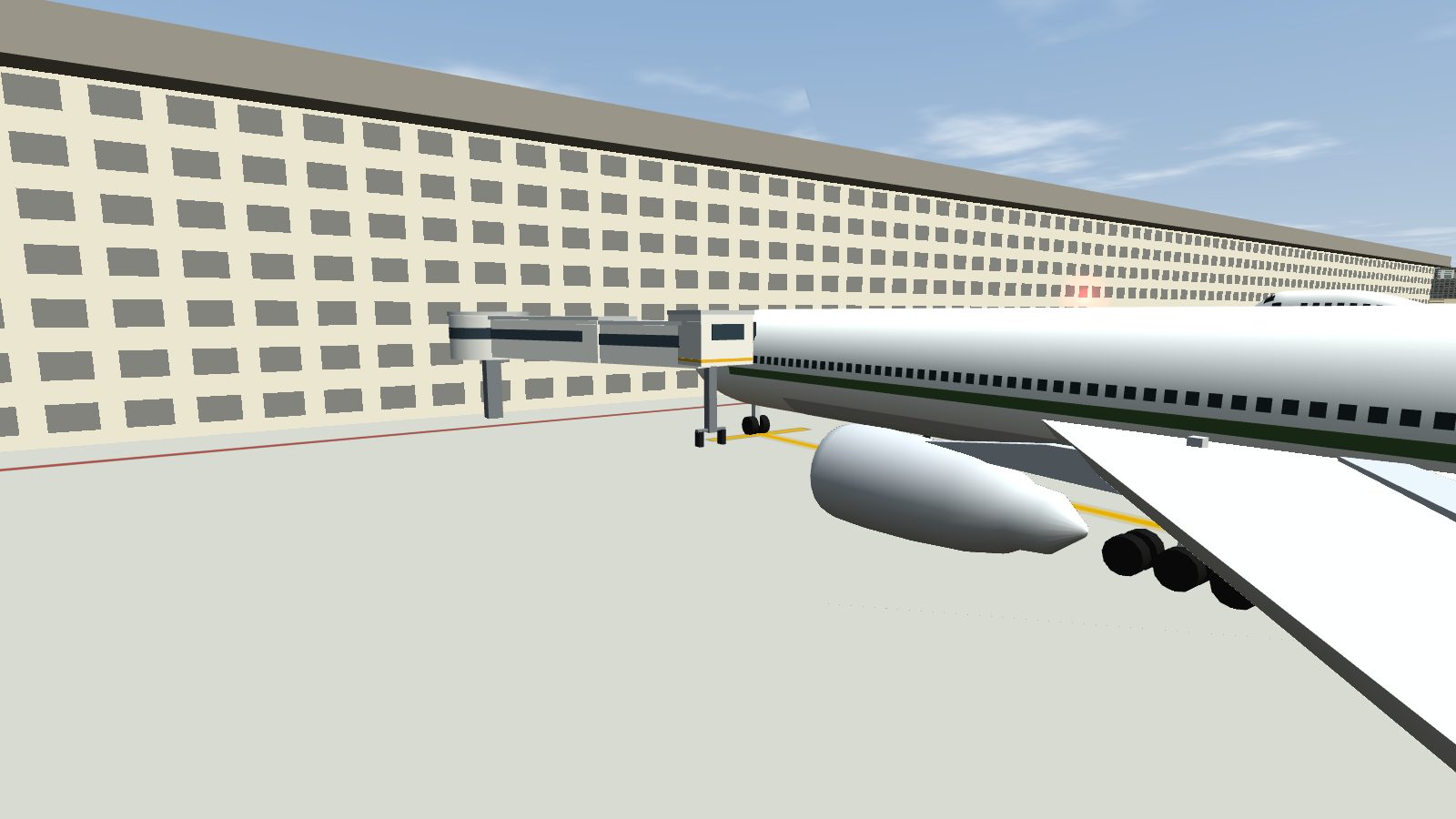
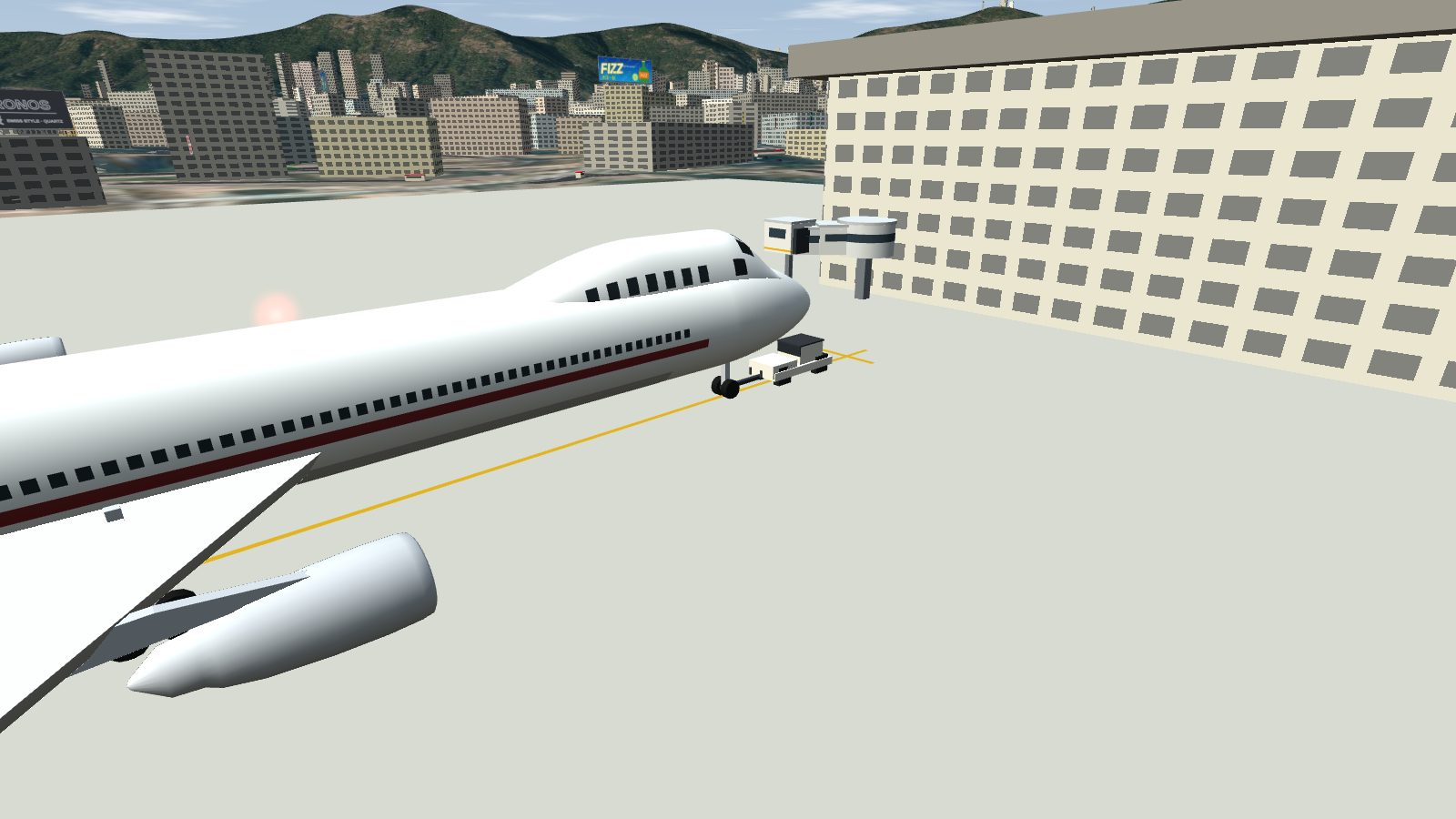
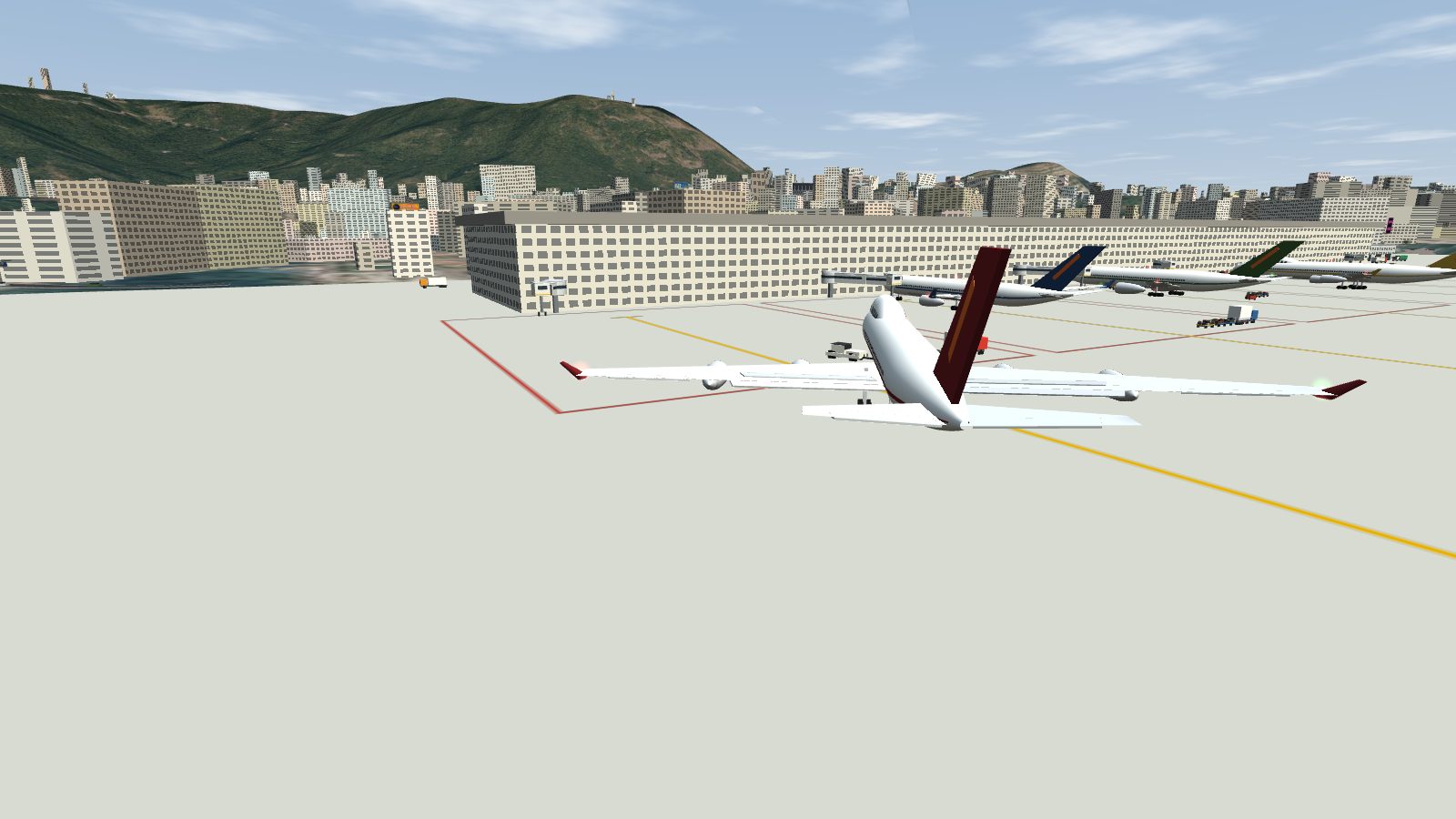
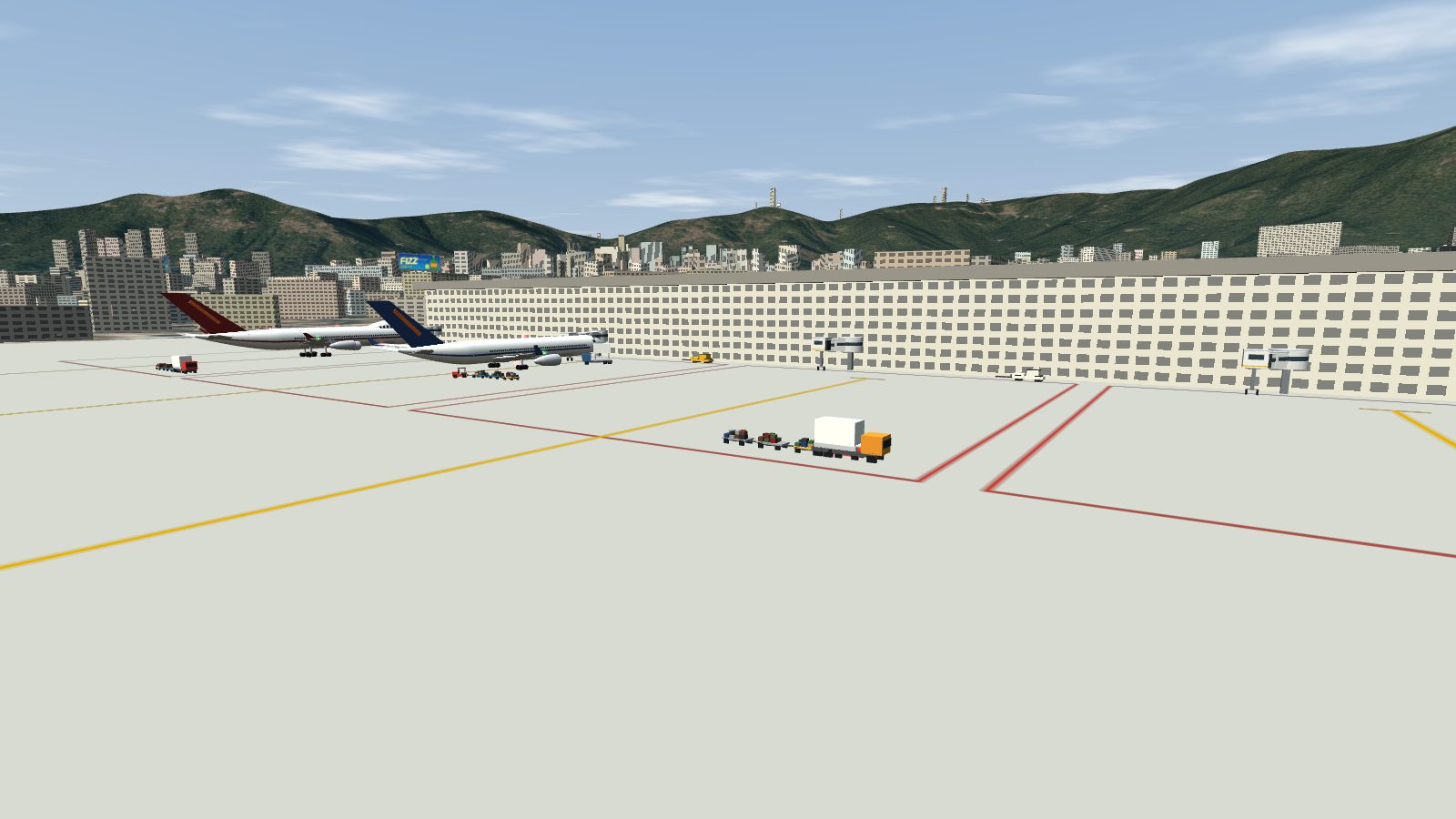
In Plane Spotter and Free flight
Each stand has an arriving aircraft that docks and sits at the bridge. Later an identical aircraft takes its place, waits, and is pushed back to depart, so it reads as a turnaround. The runway order is the same as before.
What did not change
- The traffic runs on the sim clock, so rewind and fast-forward still work.
- The autopilot still lands in every weather preset, and flying with no input still ends in a crash.
Kai Tak 客運大樓而家有空橋。飛機滑行入場,機頭向前泊喺空橋度,離開嗰陣就由拖車推返出嚟。
新增咗啲乜
- 客運大樓有六個機位,每個機位都有自己嘅空橋。大樓加長咗,等每個機位都接到大樓。
- 降落嘅飛機離開跑道,沿平行滑行道行,再轉入機位嘅黃色引導線,停喺空橋前面。
- 飛機停定之後,空橋會伸出去接駁機頭左面嘅前艙門,開出之前再縮返。
- 推機拖車喺大樓前面嘅停車位等。佢駛去機鼻起落架,將飛機直線推後,再轉到對正跑道,然後駛返停車位。
- 推完之後,飛機照舊滑行出去起飛。
- 餐飲車同行李拖車喺右面服務每架泊好嘅飛機。機場巴士冇咗,因為乘客而家行空橋。
Plane Spotter 同自由飛行
每個機位都有一架降落嘅飛機入位,泊喺空橋度。之後有一架一樣嘅飛機取代佢,等一陣再被推後起飛,睇落就好似同一架飛機轉場。跑道使用次序同之前一樣。
冇改變嘅嘢
- 交通跟住模擬時鐘行,所以倒帶同快轉照舊有效。
- 自動駕駛喺每種天氣預設都照樣降落到,冇操作飛行嘅話都照樣墜毀。
More from the blog
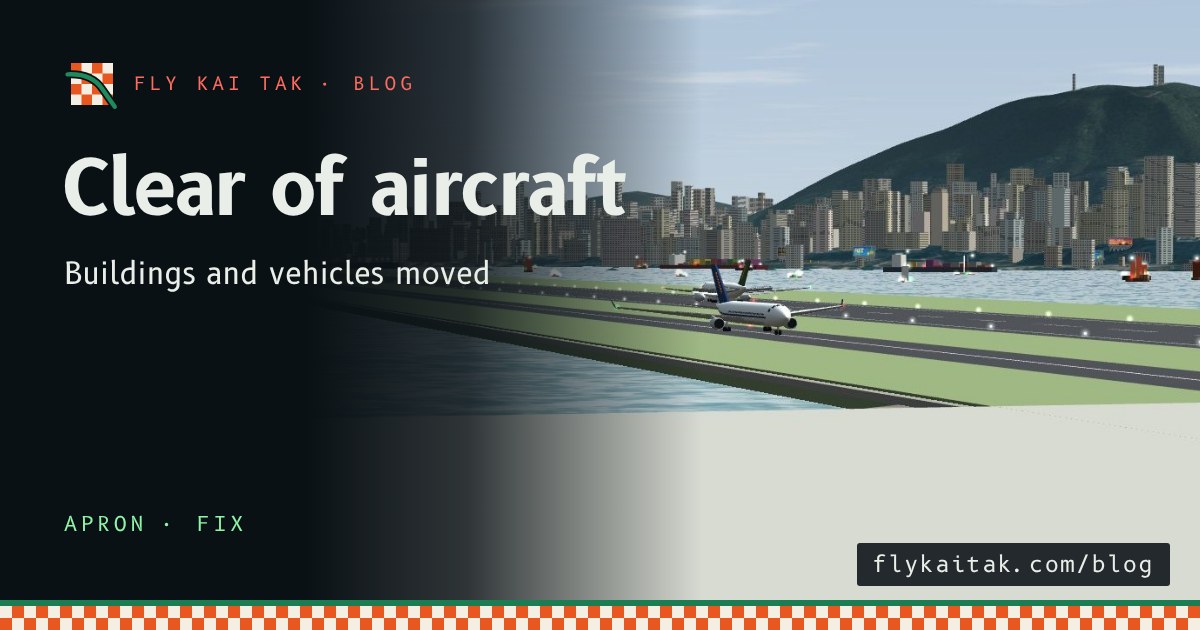
Fix: Buildings and Vehicles Clear of Aircraft
Fly Kai Tak apron fix: aircraft no longer overlap the car park, the fire station or service vehicles, which now wait out of sight until their aircraft docks.
Read the post →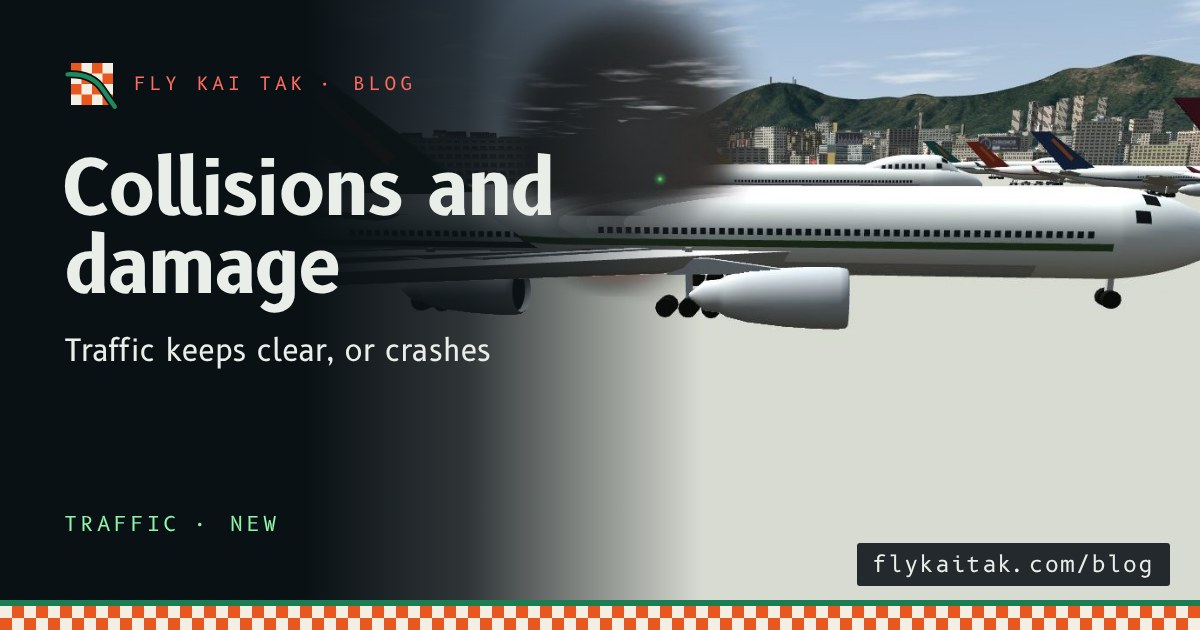
New: Aircraft Collisions and Damage
Fly Kai Tak aircraft now have collision detection: ground traffic avoids each other, and a collision shows broken wings, scorch marks, smoke and fire.
Read the post →